Blue Hour Proposal Photos: Ideas and Planning Tips
Blue hour proposal photos capture your engagement in the soft, richly blue twilight that settles just after sunset, producing a mood that golden hour simply cannot replicate. Where golden hour glows warm and energetic, blue hour is quieter, cinematic, and deeply romantic. The sun sits just below the horizon at a low angle during blue hour, and the sky fills with a saturated blue that wraps every scene in something close to magic.
This window is brief. Blue hour lasts a short, variable period depending on your latitude and the season, which is exactly what makes it so precious for a proposal. The fleeting quality of the light mirrors the preciousness of the moment itself.
Key reasons couples choose blue hour for their proposal photos:
- Cinematic atmosphere: Cool, even light creates depth and drama without harsh shadows.
- Perfect light balance: Artificial lights from street lamps, candles, and architecture glow warmly against the blue sky, producing natural contrast.
- Intimate mood: Fewer tourists linger after sunset, leaving iconic spots quieter and more private.
- Timeless aesthetic: Blue tones age beautifully in photos, feeling neither dated nor trend-dependent.
Professional coordination is not optional here. With only 20–40 minutes of ideal light, every detail must be pre-planned.
10 creative blue hour proposal photo ideas to inspire you
1. A rooftop overlooking the city skyline
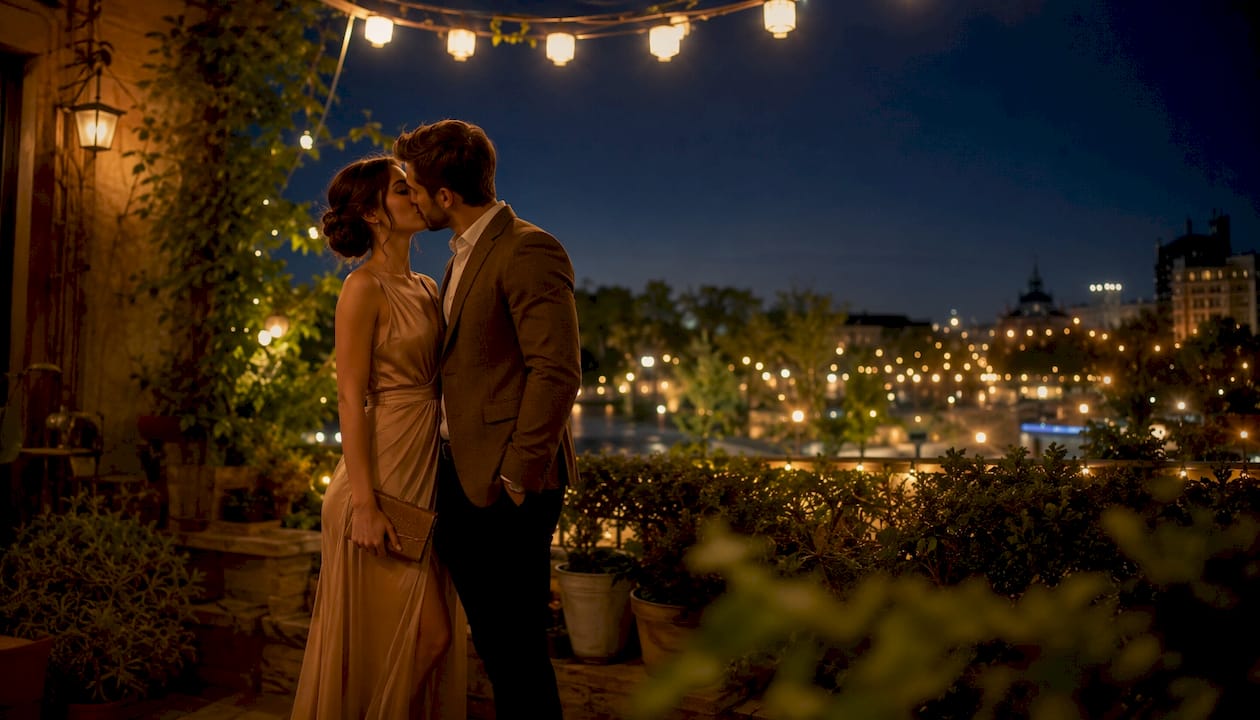
Rooftops are the most cinematic setting for blue hour proposals. As the sky deepens behind a city skyline, the building lights below begin to glow, and you get that perfect tension between the cool heavens and the warm earth. A private rooftop in Italy adds exclusivity and removes the crowd problem entirely.
2. A gondola gliding through Venice at twilight
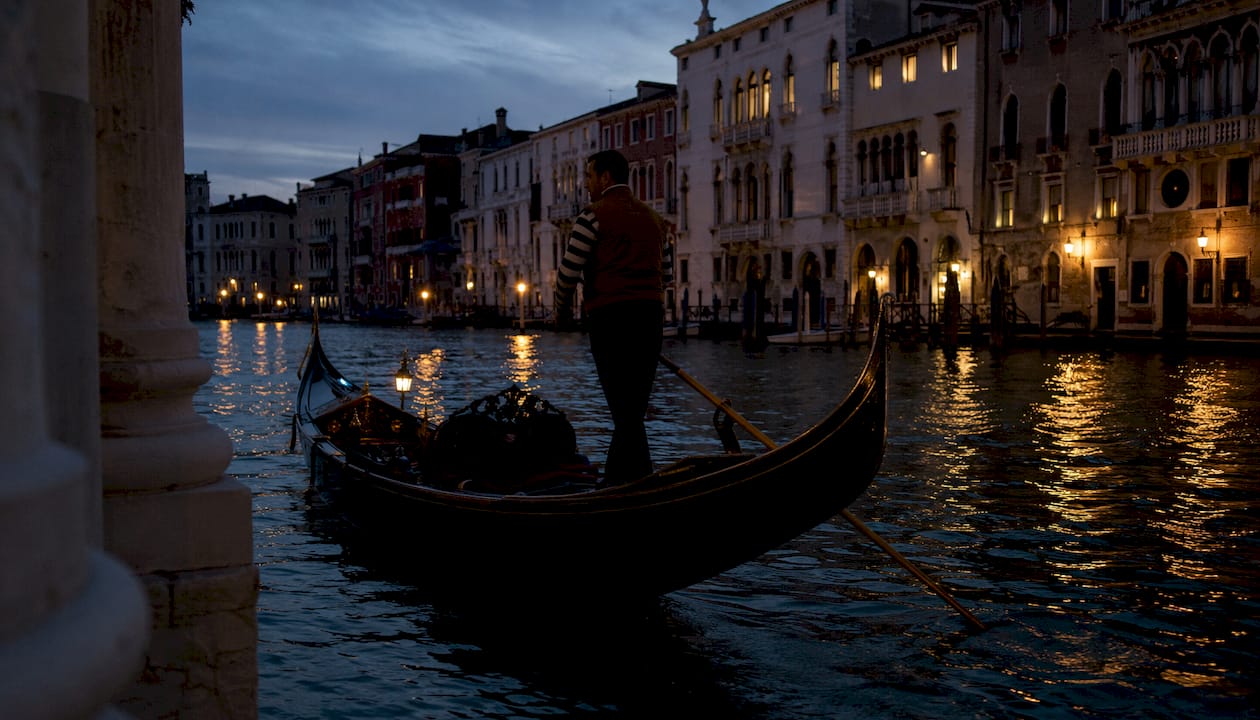
Few images rival a gondola on the Grand Canal as the sky turns deep blue. The water reflects the lantern light from centuries-old palaces, and the sound of the oar becomes part of the story. A gondola session starting before sunset can cover both golden hour warmth and the full blue hour window, giving your photographer two distinct moods in a single session.
3. A waterfront terrace with candlelight
Candlelight and blue hour are made for each other. The warm flicker of candles against a cool blue sky creates a color contrast that photographs beautifully without any artificial editing. Reserve a private terrace on the Amalfi Coast or Lake Como, add flowers and champagne, and the scene arranges itself.
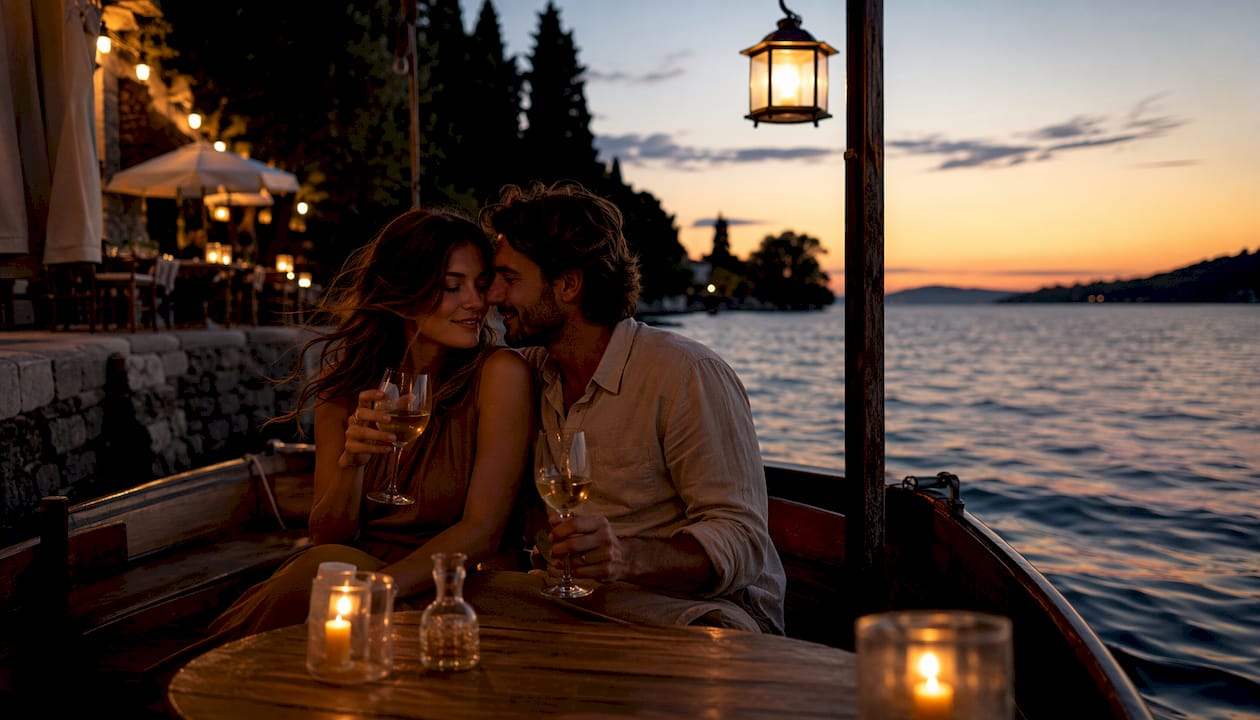
Pro Tip: Ask your photographer to position you near a lit candle or lantern. That single warm light source gives the image structure and draws the eye directly to the two of you.
4. A historic bridge or archway at dusk
Stone bridges and arched doorways frame couples naturally. During blue hour, the texture of old stone absorbs the cool light and glows faintly from nearby street lamps, adding depth that flat daylight never achieves. Venice’s Rialto Bridge, Florence’s Ponte Vecchio, and Verona’s Roman archways all work beautifully for this.
5. A garden with fairy lights strung overhead
Fairy lights suspended above a garden create a canopy of warmth against the blue sky. The effect is dreamy and intimate, especially when combined with rose petals or a floral arrangement at ground level. Gardens like the Giardini Bardini in Florence offer terraced levels that give your photographer multiple angles.
6. A two-location shoot spanning golden and blue hour
The most complete proposal photography sessions use both light phases. Start your golden hour engagement photos at a sun-drenched viewpoint, then move to a lit piazza or waterfront as blue hour settles in. The contrast between the warm first set and the cool second set tells a fuller story of the evening.
7. Candid moments on a quiet cobblestone street
Some of the most powerful blue hour proposal photos are not posed at all. A hidden photographer captures your partner’s genuine shock, the laughter that follows, the embrace that comes after. Candid proposal photos taken in the soft blue light of a quiet Italian street carry an emotional honesty that no staged portrait can match.
8. A private boat on a mirror-still lake
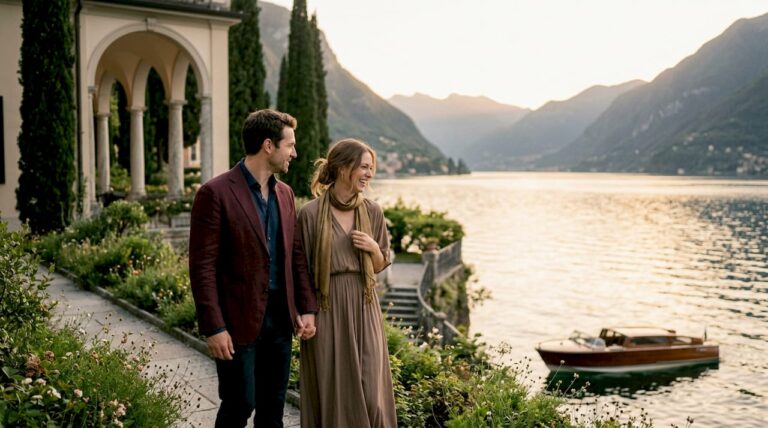
Lake Como and Lake Garda offer something rare: water so calm at dusk that it reflects the sky like glass. A private boat positions you at the center of that reflection, surrounded by mountains fading into silhouette. The blue hour light turns the water into a painting.
9. A lit cathedral square after tourists leave
Blue hour’s crowd-beating advantage is most dramatic in heavily touristed squares. Many visitors leave immediately after sunset, and the square that felt impossible to photograph an hour earlier becomes intimate and still. A professional coordinator knows exactly when to arrive.
10. A cliffside terrace on the Amalfi Coast
The Amalfi Coast at blue hour is one of the most dramatic settings on earth. The cliffs drop into a darkening sea, the village lights flicker on one by one, and the sky above turns a deep, saturated blue. A terrace reservation at the right spot gives you that view entirely to yourselves.
How to plan and capture perfect blue hour proposal photos
Timing is everything, and blue hour does not wait. Use PhotoPills to track the exact moment the sun reaches 4 degrees below the horizon at your specific location. General sunset times are not precise enough. The ideal blue hour window is defined by solar elevation, not the clock.
- Book your photographer early. Advance hiring is standard practice for popular European destinations. Last-minute availability is rare, and a photographer who has not scouted the location cannot position themselves discreetly.
- Scout the location together beforehand. Your photographer needs to know where to stand, how to blend in, and where the best light falls. This is not something to figure out on the day.
- Use a tripod. Blue hour requires longer exposures, typically 2–30 seconds, to balance ambient and artificial light sources. A tripod eliminates camera shake and keeps the image sharp.
- Set your camera for low light. For blue hour, use ISO 64–200, apertures of f/8–f/16, and shutter speeds from 2 seconds to 30 seconds. Set white balance to Tungsten (3200K) for warmer artificial light rendering, or Daylight (5500K) for a more neutral blue sky.
- Choose locations with built-in lighting. Street lamps, illuminated facades, and lit windows provide the warm contrast that makes blue hour images glow. A beautiful location with no artificial light nearby will look flat after sunset.
- Plan your post-processing in advance. In editing, balance the color temperature to keep the blue sky rich without letting it drift into cold or unnatural territory. Lightroom’s HSL panel lets you deepen the blue channel while keeping skin tones warm.
Pro Tip: Shoot in RAW format. Blue hour color temperatures shift rapidly, and RAW files give you far more latitude to correct white balance in post-processing without losing quality.
What professional photographers say about blue hour timing and coordination
The sun’s position between -4° and -6° below the horizon defines blue hour precisely. Miss that window by even ten minutes and the sky either still holds too much orange from golden hour or has gone too dark to balance with artificial light. Professional photographers describe blue hour as a deliberate artistic choice, not a fallback — one that rewards couples who plan for it specifically rather than treating it as an afterthought.
Professional coordination amplifies what the light already offers. A reserved terrace, a private gondola, or a hidden photographer positioned before you arrive all depend on logistics that cannot be improvised. In cities like Venice, blue hour timing also exploits a natural crowd shift: many tourists leave iconic spots immediately after sunset, leaving the Rialto Bridge or St. Mark’s Square far more intimate than they were an hour earlier.
The most memorable blue hour proposal sessions share one quality: the couple is fully present, not managing logistics. That presence only happens when an experienced coordinator has handled every detail in advance.
Key Takeaways
Blue hour proposal photos require precise timing, professional coordination and the right location to deliver their full cinematic impact.
| Point | Details |
|---|---|
| Blue hour window | Lasts 20–40 minutes when the sun sits 4–6 degrees below the horizon; use PhotoPills for exact timing. |
| Light balance | Artificial lights from lamps and architecture contrast beautifully with the cool blue sky during this window. |
| Crowd advantage | Tourists typically leave after sunset, making iconic spots more intimate during blue hour. |
| Camera settings | Use ISO 64–200, f/8–f/16, and 2–30 second exposures on a tripod for sharp, balanced results. |
| Proposalitaly | Offers all-inclusive packages with hidden photographers, reserved locations, and on-site coordinators timed for blue hour. |
Why blue hour is the most honest light for a proposal
Golden hour is generous. It flatters everything, warms every face, and makes even an ordinary scene look beautiful. Blue hour asks more of you. The light is cooler, softer, and more even, which means the emotion in the frame has nowhere to hide. A genuine expression of shock, the trembling hand reaching for the ring, the laugh that breaks through tears — all of it reads clearly in blue hour’s soft, unsparing light.
There is also something fitting about the timing. Blue hour arrives at the edge of the day, in the quiet space between the brightness of the afternoon and the full dark of night. A proposal lives in exactly that kind of threshold moment. The light does not just complement the occasion. It understands it.
For couples planning a proposal in Italy, the blue hour over a Venetian canal or an Amalfi terrace adds a layer of storytelling that no studio or daytime shoot can replicate. The water, the stone, the ancient architecture — all of it absorbs the blue light differently, creating texture and depth that make each image feel specific to that place and that evening.
Proposalitaly brings blue hour proposals to life across Italy
Proposalitaly plans surprise marriage proposals across 17 Italian destinations, from Lake Como’s mirror-still waters to Venice’s lantern-lit canals, with every detail timed for the most beautiful light of the day. Each all-inclusive package includes a hidden professional photographer, a reserved romantic spot, flowers, champagne, and an on-site coordinator who manages the timing so you never have to watch the clock.
Packages start from €650 for consultation-level planning, with all-inclusive proposals from €1,600 and luxury productions from €4,700+ that include private boats, musicians, and drone footage. Proposalitaly publishes real prices, explains permits, and shares crowd-beating timing for every destination. For couples who want the cinematic blue hour moment without the logistical pressure, this is exactly the kind of expert support that makes it possible. Message Proposalitaly on WhatsApp and receive a tailored plan and quote within 24 hours. Browse 2026 proposal ideas to start picturing your evening.
Recommended
- 50 Unforgettable Proposal Ideas (2026) – Proposal Italy
- Romantic Proposal Ideas to Steal Her Heart – Proposal Italy
- The Best Way to Propose: Expert Tips – Proposal Italy
- Wedding Proposal Ideas That Wow (2026) – Proposal Italy
Frequently asked questions about blue hour proposal photos
What is blue hour and when does it happen?
Blue hour is the 20–40 minute window just after sunset when the sun sits roughly 4–6 degrees below the horizon and the sky turns a deep, saturated blue. Its exact timing depends on your latitude and the season, so photographers use apps like PhotoPills to track it to the minute.
Is blue hour better than golden hour for proposal photos?
They serve different moods. Golden hour is warm and flattering; blue hour is cooler, quieter and more cinematic, with warm street and candle light glowing against the blue sky and far fewer crowds. Many couples book a session that spans both windows.
Which Italian spots are best for blue hour proposal photos?
Venice’s canals and the Rialto Bridge, the mirror-still water of Lake Como and Lake Garda, Florence’s bridges and terraced gardens, and the cliffside terraces of the Amalfi Coast all absorb blue-hour light beautifully.
How much does a blue hour proposal in Italy cost?
Proposalitaly publishes transparent prices: from €650 for consultation-level planning, from €1,600 for all-inclusive packages (hidden photographer, reserved spot, flowers, champagne and an on-site coordinator), and from €4,700+ for luxury productions with a private boat, live music and video.